24/7 emergency restoration for Eugene, Springfield, and surrounding communities
CCB #210329 info@brinkersllc.com 541-337-7501
Home / Mold remediation article
Mold remediation depends on the affected material, where moisture is coming from and whether cleanup leaves repairs to complete. This article explains how those parts fit together, how assessment differs from testing and what to consider before an affected area is rebuilt.
Completed lake-house interior by Brinker’s.
A musty smell, recurring staining or growth after a leak deserves attention even when the visible area is small. Mold can develop behind finishes, so the surface you can see may not show the whole affected area. Avoid opening a suspect wall or pulling up materials just to investigate it. Disturbing hidden growth can spread it.
For a small area on an accessible hard surface, household cleanup may be appropriate. EPA guidance generally treats areas smaller than about 10 square feet differently from larger problems. That size is one consideration, not a guarantee that a job is simple. Extensive water damage, contaminated water, hidden growth and heating or air-conditioning involvement warrant experienced help. If you have health concerns, contact a healthcare professional.
Roof leaks can wet roof sheathing and nearby materials. Moist indoor air can also reach an attic, particularly when an exhaust duct ends there. The moisture source and affected roof materials both need attention. A roof repair alone does not establish that the affected materials have been cleaned. Access and the condition of the roof materials help determine the work involved.
Moisture can come from plumbing, water entering below the building or evaporation from exposed soil. The affected subfloor, framing and insulation may need different work from the source of moisture. Covering the ground or adding a moisture-control system does not clean existing growth on building materials. Standing water and the location of affected materials are relevant to that assessment.
Water entering through a foundation, plumbing leaks and condensation are different problems. Moisture against a cool wall can also affect stored belongings or finishes placed nearby. A cleanup plan needs to consider both the exposed surface and any damp materials covering it. Source repair, removal of affected finishes and rebuilding may be separate parts of the job.
Repeated growth around a shower can be linked to surface moisture and ventilation. A leak behind the wall needs a different response from dampness on an accessible surface. Discoloration that returns, softened wall material or staining beyond the wet area calls for a closer look. Fresh caulk or paint can conceal the appearance while leaving the cause in place.
The material and its condition matter. Mold on a sound hard surface may be cleaned and the surface dried. Porous materials such as carpet, ceiling tiles and drywall can retain growth within them and may need replacement. Damaged wood also needs an assessment of its condition and the building work required.
Surface color cannot establish how far a problem extends or which mold is present. A patch described as black mold still needs a moisture and material assessment. The assessment needs to address the material condition and the related repair needs.
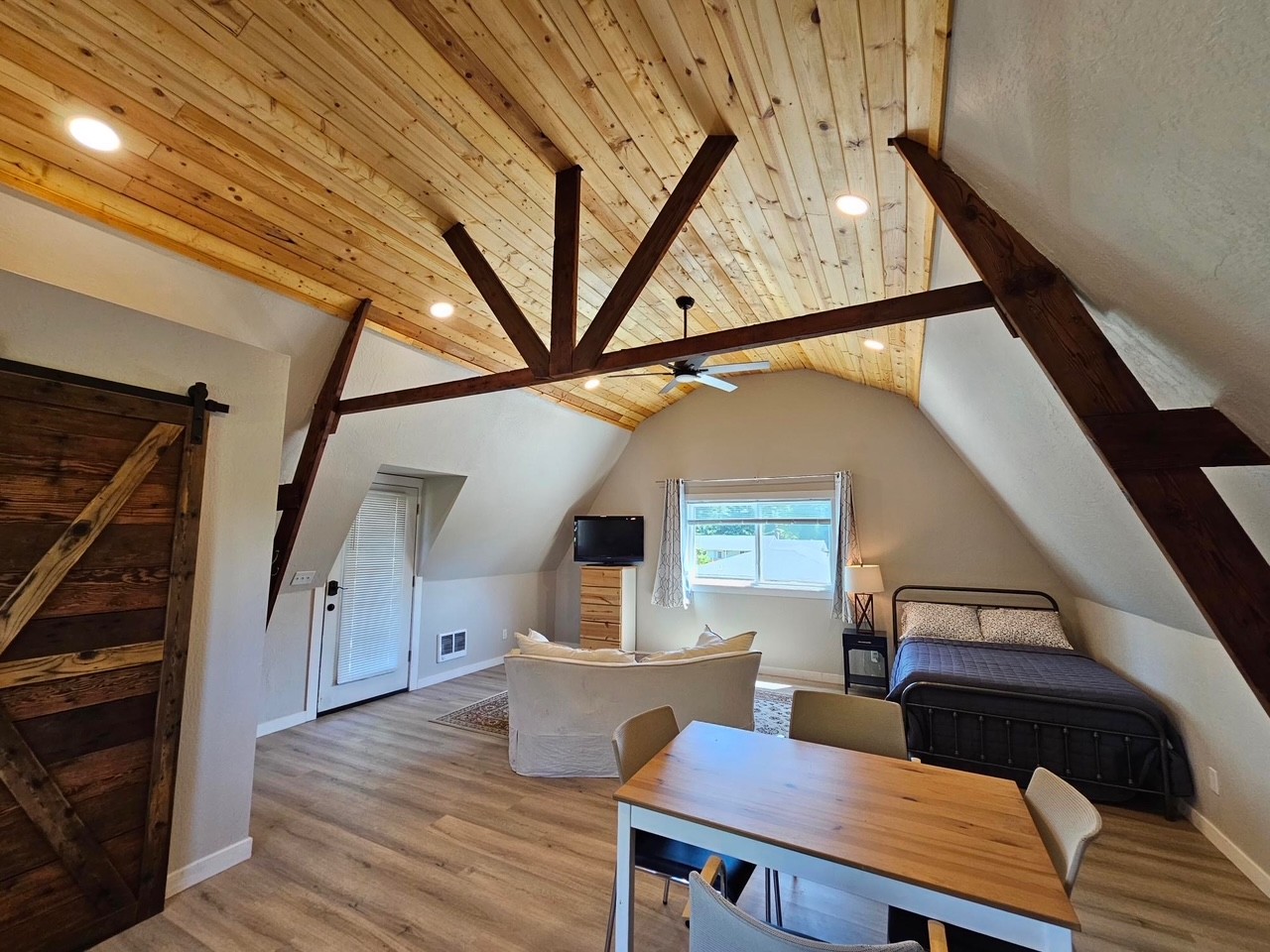
Completed barn-apartment interior by Brinker’s.
The building assessment identifies the areas and materials requiring attention and supports a proposed cleanup and repair scope. Share existing reports, photos or records of earlier work when available. You can start the conversation without them.
EPA guidance says sampling is usually unnecessary when visible mold is present. There are no federal airborne mold limits that turn a test result into a universal pass or fail. A project can still have a specific sampling requirement, such as checking a cleaned surface. Sampling and interpretation need an appropriately experienced provider. Property remediation and independent testing have separate roles.
The moisture issue, cleanup status and any project-specific testing requirements need to be understood before the affected area is closed up. Keep the cleanup records with the repair plan. A new finish or a dry-looking surface alone does not document all the work that has been completed.
Cleaning addresses affected material. Preventing another moisture problem also depends on the cause. In the Willamette Valley’s cool, wet winter season, useful observations include dampness after rain, plumbing leaks and condensation on cold windows or walls. These patterns help explain the concern, but they do not diagnose an individual building.
Keep gutters and drainage working, have leaks repaired and vent moisture-producing appliances outdoors. Persistent dampness needs a source assessment. A contractor can then distinguish cleanup from roof, plumbing, ventilation or other building work.
Confirm which surfaces can be cleaned and which materials are proposed for removal. Ask where the assessment ends if concealed areas have not been opened. A cleanup scope should make those boundaries understandable before construction begins.
Find out whether the moisture source has been addressed or whether that work remains separate. Cleaning an affected surface and repairing the leak that wet it are different tasks. The proposed work should identify who is handling each part.
Clarify whether independent sampling is required for this project and who will interpret the results. If a requirement must be met before the area is rebuilt, include that step in the coordination of the work.
For an associated water loss, the existing water-restoration planning guide explains general estimate factors, drying and rebuilding schedules, documentation and insurance roles.
When cleanup leaves a building area unfinished, use the existing restoration and repairs service to review reconstruction. That page explains the construction handoff for property damage. For an active water loss, water extraction and drying covers the connected mitigation stage.

Completed kitchen interior by Brinker’s.
For more detail, see EPA’s mold cleanup guidance and Oregon State University’s moisture checklist.
For a property-specific service request in the Willamette Valley, see Brinker’s mold remediation service.