Water restoration in Eugene
Local water mitigation and repairs.
Explore →CCB #210329 info@brinkersllc.com 541-337-7501
Water removal, drying and sewage cleanup
Water on the floor is only part of the loss. Brinker's helps Willamette Valley homeowners and small businesses address wet building materials, sewage contamination, and the repairs needed after cleanup.
What this service addresses
Water mitigation controls the immediate damage. Drying addresses moisture left in the building. Restoration repairs address what cannot remain as it is. Your property may need one stage or all three.
Water extraction and cleanupTell us where water appeared and which rooms or building levels it reached. We assess the affected area, remove water, and establish the cleanup work. Knowing the source helps distinguish restoration needs from a separate plumbing or equipment repair.
Drying and monitoringWet flooring and other building materials can need attention after standing water is gone. Professional drying equipment and monitoring help guide the next stage. The extent of wet materials and changing drying conditions influence how the project progresses.
Sewage damageA sewage backup is a contamination problem as well as a water problem. Describe it when you call so the cleanup plan accounts for affected materials and handling needs. Sewage cleanup is assessed separately from an ordinary water loss.
Restoring the affected spaceOnce mitigation is complete, damaged finishes may still need repair or replacement. Brinker's can connect those findings to construction, so water removal and the repair estimate address the same loss.
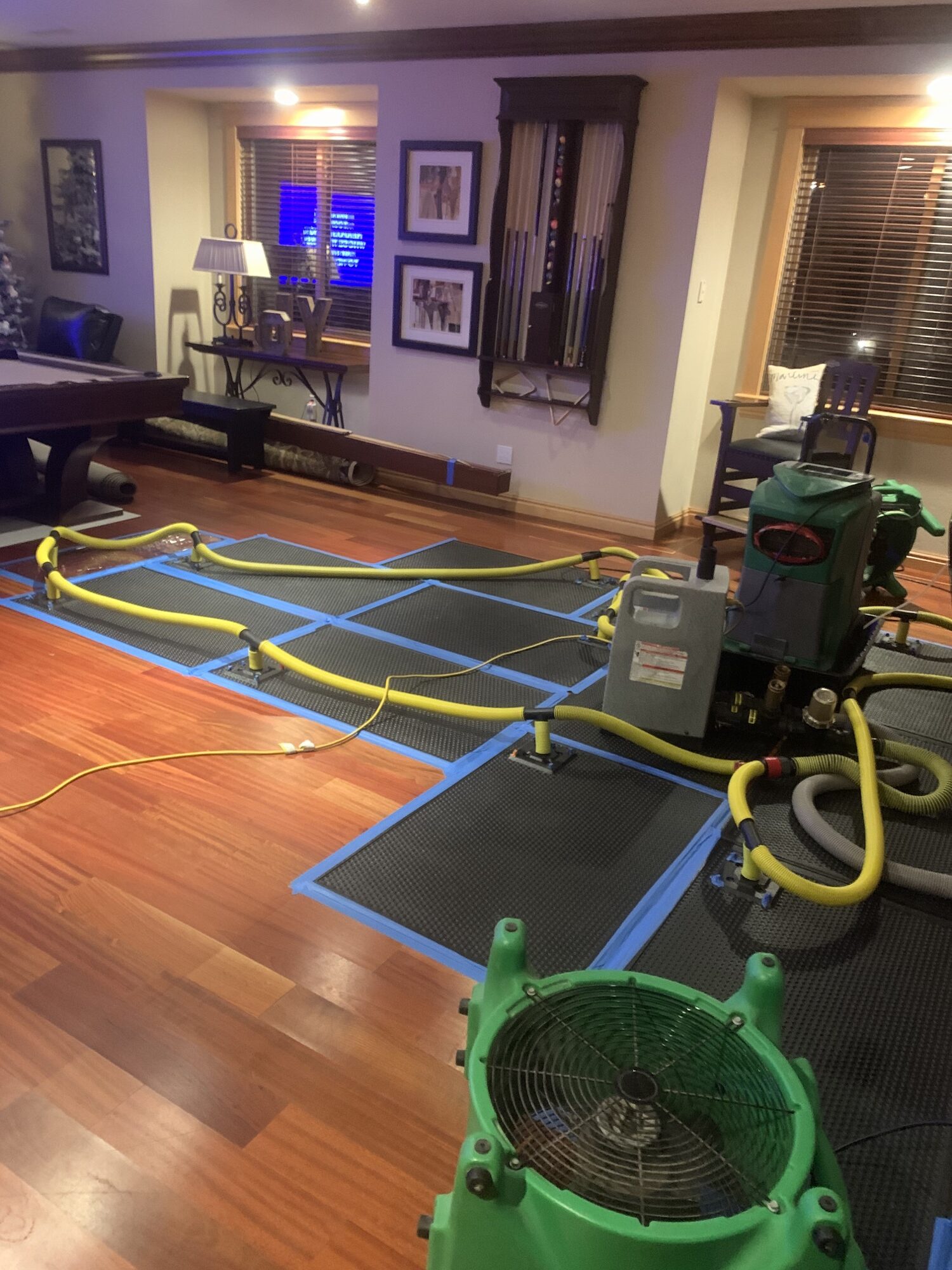
Drying equipment positioned during a Brinker’s water mitigation project.
Planning the work
Water restoration involves more than removing the water you can see. The affected materials, possible contamination and work already completed all shape the next step. Brinker’s helps homeowners and small businesses understand the condition of the property and plan the restoration work. You do not need to identify the source or decide which technical service to request before calling.
Tell us what you have noticed and where it happened, even if the full extent is unclear. Brinker’s assesses the damage and documents the restoration scope. A leak or backup may also need work to resolve its source; repairing that source and restoring the affected property are related but different jobs.
Extraction addresses water that needs to be removed. Drying addresses moisture remaining in affected materials. The amount of visible water alone does not determine the full plan. Brinker’s considers the affected rooms, materials and access when planning mitigation and drying. Explore Water extraction and drying for the difference between these stages and the decisions that connect them.
Mention a possible sewage backup when you contact us, even if you are uncertain. Sewage cleanup needs an assessment of the affected areas and materials rather than an assumption that ordinary water removal is enough. A suspected mold issue may also need its own mold and biohazard assessment. Brinker’s helps identify the relevant restoration scope instead of asking you to diagnose it.
Removing water and drying the property do not necessarily replace damaged walls, floors or finishes. Brinker’s also provides restoration repairs and rebuilding, with the repair scope based on the condition of the property and the work already completed. See Water-damage rebuilding for the handoff, material decisions and estimate planning.
Cleanup, drying and reconstruction can involve different decisions and schedules. Brinker’s helps document the work and coordinate restoration information for the insurance process; the insurer determines coverage and claim payments. Our Costs, timing and restoration planning guide explains the factors to discuss, without substituting a generic price or timeline for an assessment of your property.
Connected services
Willamette Valley coverage
Our water restoration work serves Eugene, Springfield, Veneta, Junction City, Coburg, and surrounding communities across Lane County and parts of Linn County. Share your property location when requesting help so we can confirm availability.
Before work begins
Yes. Describe what you noticed, when you noticed it, and the rooms affected. You do not need to diagnose the cause before calling. Any source-repair needs can be discussed alongside the restoration assessment.
Yes. Tell us about a suspected sewage backup in the first conversation. That information changes the assessment and cleanup needs, even if the affected area looks similar to another water loss.
Mold remediation is a separate service. If you have noticed a mold concern or know about earlier moisture damage, mention it so we can review the relevant cleanup and repair needs.
Talk with our team
Call 541-337-7501 for urgent water or sewage damage. For a past loss or a repair assessment, send the property location and a short description through Contact.